Chapter Two: Mathias
When Aloisia was in her mid-thirties—an old maid—she was asked by Matthias Schupfer, from the nearby village of Gröbming, to marry him and go with him to the new world. Matthias had already lived in the United States for some years.
As my mother tells it, “the story was that he was ready to marry and start a family. He went back to the old country to find a wife. He had one in mind, but she turned him down. So grandmother was his second choice. I wonder whether she jumped at the chance to go out in the world or whether it was a hard decision for her, as she surely knew she would probably never see her family in Austria again—or her beloved mountains.”
Aloisia was not an attractive woman. She had dark, craggy features, bushy eyebrows which have been a family trait in our family ever since, large manly hands, and an oversized nose. She was of a sturdy build and tended towards plumpness. Nobody in the family knows for sure why she had not been married before Mathias showed up, but it is possible that her physical unattractiveness was a factor. This is the earliest photograph we have of Aloisia, taken around 1894, when she was around forty years old. Matthias is holding my grandfather Herman on his lap. Herman's brother Otto is standing between them.
The Schupfer family tree has been traced back to early patriarch Georg Schupfer, who was born around 1750. His son, Josef, was born at Untertal #30 in 1790 and died in 1850. His son, Mathias Schupfer, was born in Birnberg #15 (the same town the Knaus family was from) in 1812 and died in 1885. This Mathias was my great-grandfather Mathias’s father.
My great-grandfather Mathias Schupfer is an enigmatic character who doesn’t come out too well in family stories. Though a very hard worker and a skilled carpenter, he had a terrible drinking problem. In fact, my grandfather was so upset by his father’s drinking that he refused to drink a drop of liquor in his whole life. Mathias brought his new bride to a strange land, fathered three children, and then, as soon as they were old enough to manage the farm without him, he abandoned the family, never to be seen again. I do not remember my grandpa ever saying anything much about him, other than that he’d left them and that he was an alcoholic. My grandfather was also very sad that because Mathias had abandoned the family, Herman had to quit school after eighth grade to run the farm with his older brother Otto. Herman was such a smart man that it was a shame that he never was able to go to high school or college. However, he became a successful businessman despite his lack of formal schooling.
My grandfather Herman writes in his family history: “My father Mathias Schupfer was born March 16, 1843 in Winkl, Gröbming, Steiermark, Austria. He came to America in the 1870’s on a wind jammer (sail boat) as a carpenter. He worked his way across the ocean to earn his passage. The only big job he had to do on the voyage was to build a coffin for a deceased passenger.”
 A windjammer from the time period.
“It took three weeks to cross the Atlantic from Hamburg, Germany to New York, New York. He went to Pocahontas, Missouri where he had a half-brother who had emigrated there previously. His name was Joseph Ladreiter.”
“Father did carpenter work there and later went to California, doing carpenter work around San Francisco. A brother, Rupert, followed him from Austria and they decided to find some land to homestead. They came north to Portland, Oregon, father doing carpenter work while Rupert looked for a location. Rupert came to Lewiston, Idaho in 1877 by way of Yakima, Washington. He would hire an Indian with an extra saddle horse every time he wanted to go farther. He met General Howard’s army in Umatilla, they going down, he coming up.”
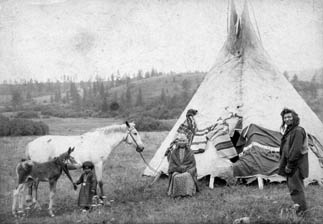
General O.O. Howard, who’d lost an arm in the American Civil War and won the Medal of Honor, had been charged with moving the Nez Perce tribe from their homeland in Oregon to a reservation in Idaho. Nez Perce Indians near Spalding, Idaho in the 1890s. Aloisia knew many and traded with them for goods.
Herman continues the story: “After arriving in Lewiston father met him later and they spent some time looking around Anatone, Washington, then back to Lewiston and father doing carpenter work around Genesee (Idaho).”
“Rupert was told at Lewiston that there were good prospects that a railroad would be built down the Big Potlatch Creek so he hired a saddle horse and rode through Genesee and down over Fix Ridge to the neighborhood of the Big and Middle Potlatch Creek junction. Here he found good water and timber. Here they decided to homestead. Rupert filed on 160 acres, part of what is now Juliaetta and father filed on 160 acres farther north one fourth of a mile in 1879.”
My mom adds, “Grandfather Schupfer bought land on Potlatch Ridge, homesteaded, and later moved to Juliaetta.”
“They each built a cabin and were required to sleep on their land a certain number of nights each year for five years and make certain improvements. Rupert did most of the improving while father did carpenter work as money was needed.”
“In 1884 they were issued deeds to their homesteads, these were signed by President Chester A. Arthur. Father kept on making improvements on his own place and also for others. Rupert platted part of his homestead as a townsite, this was at that time named Schupfer.” The name was later changed to Juliaetta. The postmaster of Schupfer, Idaho proposed changing the name to honor his two daughters, Julia and Etta. Thus, the Schupfer name lost its chance to grace an American town.
“Our father Matthias made a trip back to Austria in 1887 and in 1888 Aloisia Knaus of Schladming, Austria came back with him and they were married in New York, New York. From there they went by boat to Norwalk, Virginia (possibly Norfolk) then by train to Palouse Junction where they were met by his brother Rupert, with a team and buggy or hack (spring wagon).”

In a photograph taken about 1900 on Mathias’s front porch near Juliaetta, the three Schupfer brothers pose with home-made wine from their vineyards. Left to right, they are Rupert, Mathias, and Florian.
The letter above was written on May 28, 1886 in Juliaetta, Idaho by Matthias’s brother Rupert. Written in old German script, my mom and I had a friend of hers from Germany translate it for us. It tells of planting many trees on Rupert’s land. Rupert planted over 6,000 trees on his land, both sugar maples and catalpas. Rupert also writes that he has just gotten married two days previously to Constancia Altmiller. Rupert writes: “Altmiller was very much against it because he wanted his daughter to marry only a Catholic. But our relationship had developed so far that marriage had become an urgent matter.”
When Aloisia was in her mid-thirties—an old maid—she was asked by Matthias Schupfer, from the nearby village of Gröbming, to marry him and go with him to the new world. Matthias had already lived in the United States for some years.
As my mother tells it, “the story was that he was ready to marry and start a family. He went back to the old country to find a wife. He had one in mind, but she turned him down. So grandmother was his second choice. I wonder whether she jumped at the chance to go out in the world or whether it was a hard decision for her, as she surely knew she would probably never see her family in Austria again—or her beloved mountains.”
Aloisia was not an attractive woman. She had dark, craggy features, bushy eyebrows which have been a family trait in our family ever since, large manly hands, and an oversized nose. She was of a sturdy build and tended towards plumpness. Nobody in the family knows for sure why she had not been married before Mathias showed up, but it is possible that her physical unattractiveness was a factor.
This is the earliest photograph we have of Aloisia, taken around 1894, when she was around forty years old. Matthias is holding my grandfather Herman on his lap. Herman's brother Otto is standing between them.The Schupfer family tree has been traced back to early patriarch Georg Schupfer, who was born around 1750. His son, Josef, was born at Untertal #30 in 1790 and died in 1850. His son, Mathias Schupfer, was born in Birnberg #15 (the same town the Knaus family was from) in 1812 and died in 1885. This Mathias was my great-grandfather Mathias’s father.
My great-grandfather Mathias Schupfer is an enigmatic character who doesn’t come out too well in family stories. Though a very hard worker and a skilled carpenter, he had a terrible drinking problem. In fact, my grandfather was so upset by his father’s drinking that he refused to drink a drop of liquor in his whole life. Mathias brought his new bride to a strange land, fathered three children, and then, as soon as they were old enough to manage the farm without him, he abandoned the family, never to be seen again. I do not remember my grandpa ever saying anything much about him, other than that he’d left them and that he was an alcoholic. My grandfather was also very sad that because Mathias had abandoned the family, Herman had to quit school after eighth grade to run the farm with his older brother Otto. Herman was such a smart man that it was a shame that he never was able to go to high school or college. However, he became a successful businessman despite his lack of formal schooling.
My grandfather Herman writes in his family history: “My father Mathias Schupfer was born March 16, 1843 in Winkl, Gröbming, Steiermark, Austria. He came to America in the 1870’s on a wind jammer (sail boat) as a carpenter. He worked his way across the ocean to earn his passage. The only big job he had to do on the voyage was to build a coffin for a deceased passenger.”
A windjammer from the time period.“It took three weeks to cross the Atlantic from Hamburg, Germany to New York, New York. He went to Pocahontas, Missouri where he had a half-brother who had emigrated there previously. His name was Joseph Ladreiter.”
“Father did carpenter work there and later went to California, doing carpenter work around San Francisco. A brother, Rupert, followed him from Austria and they decided to find some land to homestead. They came north to Portland, Oregon, father doing carpenter work while Rupert looked for a location. Rupert came to Lewiston, Idaho in 1877 by way of Yakima, Washington. He would hire an Indian with an extra saddle horse every time he wanted to go farther. He met General Howard’s army in Umatilla, they going down, he coming up.”
General O.O. Howard, who’d lost an arm in the American Civil War and won the Medal of Honor, had been charged with moving the Nez Perce tribe from their homeland in Oregon to a reservation in Idaho.
Nez Perce Indians near Spalding, Idaho in the 1890s. Aloisia knew many and traded with them for goods.Herman continues the story: “After arriving in Lewiston father met him later and they spent some time looking around Anatone, Washington, then back to Lewiston and father doing carpenter work around Genesee (Idaho).”
“Rupert was told at Lewiston that there were good prospects that a railroad would be built down the Big Potlatch Creek so he hired a saddle horse and rode through Genesee and down over Fix Ridge to the neighborhood of the Big and Middle Potlatch Creek junction. Here he found good water and timber. Here they decided to homestead. Rupert filed on 160 acres, part of what is now Juliaetta and father filed on 160 acres farther north one fourth of a mile in 1879.”
My mom adds, “Grandfather Schupfer bought land on Potlatch Ridge, homesteaded, and later moved to Juliaetta.”
“They each built a cabin and were required to sleep on their land a certain number of nights each year for five years and make certain improvements. Rupert did most of the improving while father did carpenter work as money was needed.”
“In 1884 they were issued deeds to their homesteads, these were signed by President Chester A. Arthur. Father kept on making improvements on his own place and also for others. Rupert platted part of his homestead as a townsite, this was at that time named Schupfer.” The name was later changed to Juliaetta. The postmaster of Schupfer, Idaho proposed changing the name to honor his two daughters, Julia and Etta. Thus, the Schupfer name lost its chance to grace an American town.
“Our father Matthias made a trip back to Austria in 1887 and in 1888 Aloisia Knaus of Schladming, Austria came back with him and they were married in New York, New York. From there they went by boat to Norwalk, Virginia (possibly Norfolk) then by train to Palouse Junction where they were met by his brother Rupert, with a team and buggy or hack (spring wagon).”
In a photograph taken about 1900 on Mathias’s front porch near Juliaetta, the three Schupfer brothers pose with home-made wine from their vineyards. Left to right, they are Rupert, Mathias, and Florian.
The letter above was written on May 28, 1886 in Juliaetta, Idaho by Matthias’s brother Rupert. Written in old German script, my mom and I had a friend of hers from Germany translate it for us. It tells of planting many trees on Rupert’s land. Rupert planted over 6,000 trees on his land, both sugar maples and catalpas. Rupert also writes that he has just gotten married two days previously to Constancia Altmiller. Rupert writes: “Altmiller was very much against it because he wanted his daughter to marry only a Catholic. But our relationship had developed so far that marriage had become an urgent matter.”